If you’ve recently torn your ACL – or you’re preparing for reconstruction surgery – you’re probably asking one question above all else: how long does ACL rehab take?
The honest answer is more nuanced – and more empowering – than the old “just wait six months” approach. The research on ACL rehabilitation has advanced dramatically over the last decade, and understanding the real timeline can change how you approach every phase of recovery. Let’s break it all down.
If you’re navigating an ACL tear and want a clear answer to how long does ACL rehab take for you specifically, schedule a free discovery call with one of our Doctors of Physical Therapy. No obligation, no pressure – just answers.
First, What Happens During ACL Reconstruction?
The anterior cruciate ligament (ACL) is a primary stabilizer of the knee, controlling rotational movement and forward translation of the tibia. When it ruptures – typically from a non-contact pivoting or landing mechanism – surgical reconstruction is often recommended for athletes who want to return to cutting, pivoting, or jumping sports.
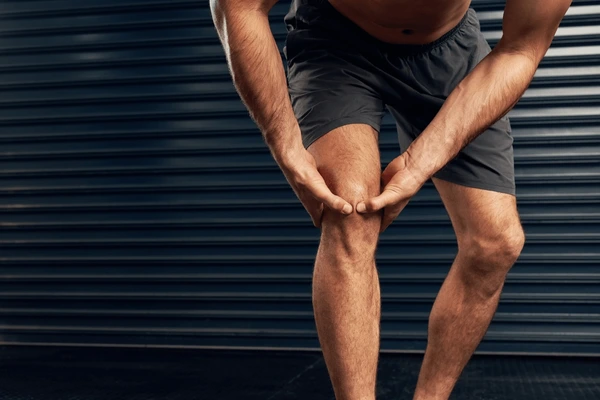
During surgery, your surgeon replaces the torn ligament with a graft – most commonly from your own patellar tendon, hamstring tendon, or quadriceps tendon. This new graft then undergoes a biological maturation process called ligamentization, during which it remodels into a functional ligament. This process takes months to complete and is one of the primary reasons ACL rehab cannot be rushed arbitrarily.
So, How Long Does ACL Rehab Take? The Real Timeline
The short answer: 9 to 12 months is the current evidence-based standard for return to competitive sport – and in some cases, longer is safer.
This has shifted significantly from the older “6-month” timelines that were common prior to 2010. Here is what the research shows:
A landmark cohort study from the Delaware-Oslo ACL research group found that athletes who returned to level I sport (cutting, pivoting, jumping) within the first 9 months after surgery had a reinjury rate 4 times higher than those who waited beyond 9 months. Importantly, those who both waited beyond 9 months and passed objective strength and functional criteria had an 84% reduction in reinjury risk. That is one of the most striking statistics in the ACL literature.
A more recent 2024 meta-analysis of 21 studies confirmed this finding at scale, showing that athletes who suffered a second ACL injury had returned to sport approximately 25 days earlier on average than those who did not – reinforcing that timing matters.
What this means for you: when asking how long ACL rehab takes, the better question is how ready can you be when you return – not how fast.
The 5 Phases of ACL Rehab: What the Timeline Actually Looks Like
Modern ACL rehab is organized into criteria-based phases. You advance when you meet objective benchmarks – not simply because time has passed. Here is what each phase looks like:
Phase 1: Acute Recovery (Weeks 0–2)
Goals: Control swelling and pain, restore full knee extension, re-activate the quadriceps.
Immediately after surgery, the focus is on reducing inflammation and preventing the quadriceps shutdown that almost always follows ACL injury and reconstruction. Research has demonstrated that preoperative quadriceps strength is a significant predictor of knee function two years after reconstruction — meaning the work you do before surgery matters.
Key milestones before progressing:
– Swelling controlled (minimal effusion)
– Full passive knee extension equal to the opposite side
– Ability to perform a straight leg raise without extension lag
– Comfortable weight-bearing with or without crutches
Phase 2: Early Strengthening (Weeks 2–6)
Goals: Restore full range of motion, begin progressive quadriceps and lower extremity strengthening, normalize gait.
This phase of ACL rehab focuses on rebuilding the foundation. Closed-chain exercises – such as mini squats, leg press, and step-ups – are prioritized because they load the graft in a safe, controlled manner. Open-chain knee extension is typically introduced cautiously and within controlled ranges per your surgeon’s protocol.
Key milestones before progressing:
– Full active range of motion (0–135° or symmetrical to the uninvolved side)
– Normal gait pattern without assistive device
– No significant swelling with activity
– Single-leg squat to 60° without pain or instability
Phase 3: Neuromuscular Strengthening (Weeks 6–16)
Goals: Progressive loading, address strength deficits, improve neuromuscular control and proprioception.
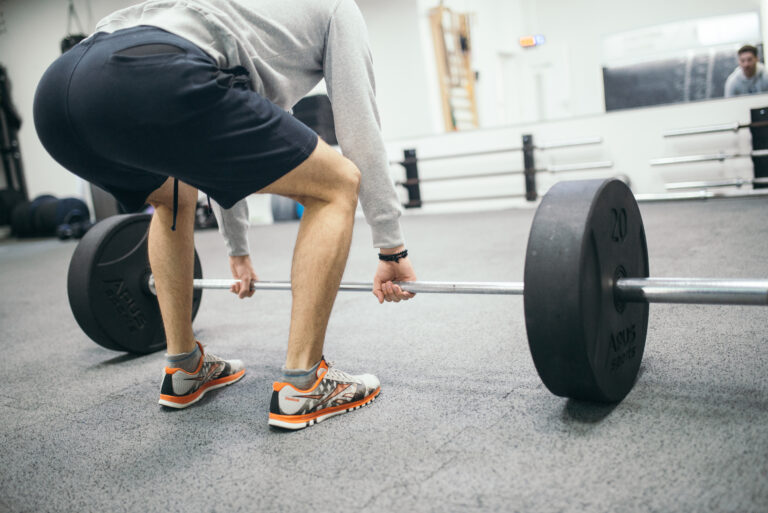
This is where structured strength training becomes the centerpiece of your ACL rehab program. Quadriceps strength is the single most important physical variable in ACL rehabilitation – and strength deficits at this stage have downstream consequences for re-injury risk and long-term function.
Strength is typically measured using the Limb Symmetry Index (LSI) – a comparison between your surgical and non-surgical leg, expressed as a percentage. An LSI of 90% or greater on quadriceps isokinetic testing is a standard progression criterion, though some evidence supports aiming for 100% symmetry before return to sport.
Key milestones before progressing:
– Quadriceps LSI ≥ 70–80% (isokinetic or estimated)
– Single-leg squat with good neuromuscular control
– No effusion with progressive loading
– Hamstring LSI ≥ 80%
Feeling unsure about whether you’re progressing the way you should be? A physical therapist can objectively measure where you stand and adjust your ACL rehab program accordingly. Book a free discovery call to get a clear picture.
Phase 4: Sport-Specific Training (Months 4–7)
Goals: Running mechanics, agility, plyometric progression, sport-specific movement patterns.
Once adequate strength is established, ACL rehab transitions to dynamic movements. Running is typically introduced in a structured progression – straight line jogging, then change-of-direction, then reactive and sport-specific drills.
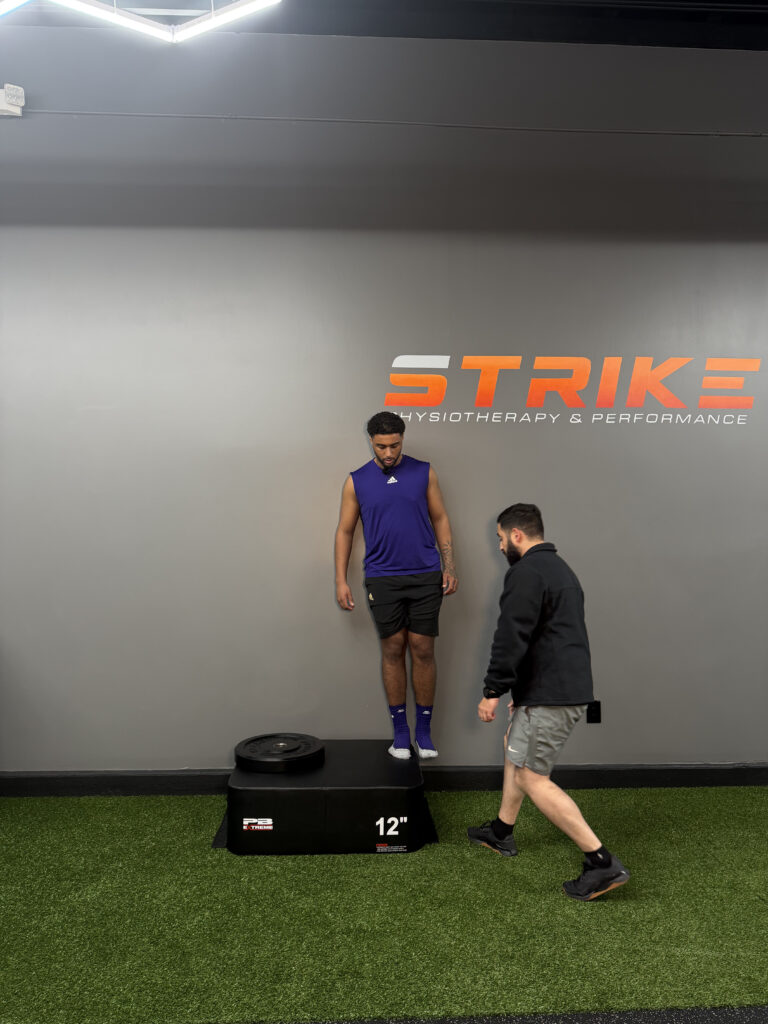
Plyometric training (jumping, landing, bounding) is introduced in a stepwise manner. Research has outlined criteria-based frameworks for progressing through the return-to-sport phase, emphasizing that landing mechanics, strength, and power must all be assessed before advancing.
Key milestones before progressing:
– Full straight-line running without pain or swelling
– Quadriceps LSI ≥ 80–85%
– Basic single-leg plyometric competency (controlled landing mechanics)
– Clearance from surgeon for dynamic activity
Phase 5: Return to Sport (Months 7–12+)
Goals: Pass objective criteria, demonstrate sport-specific readiness, and return to full training and competition.
This is the phase of ACL rehab where most re-injuries occur – and where the research is most directive. A study of 159 professional soccer players found that athletes who did not meet all six discharge criteria before returning to sport had a 4 times greater risk of ACL graft rupture. The criteria they evaluated included:
– Isokinetic quadriceps strength LSI ≥ 90%
– Isokinetic hamstring strength LSI ≥ 90%
– Single-leg hop for distance LSI ≥ 90%
– Triple hop for distance LSI ≥ 90%
– Crossover triple hop LSI ≥ 90%
– 6-meter timed hop LSI ≥ 90%
Evidence-based clinical practice guidelines recommend that return-to-sport decisions incorporate all three of the following domains:
1. Impairment-based criteria (strength, range of motion)
2. Functional performance criteria (hop tests, agility)
3. Psychological readiness (ACL-RSI or similar validated questionnaire)
Importantly, research from the Delaware-Oslo cohort has demonstrated that it is activity and functional readiness, not age, that determine second injury risk. This challenges the common assumption that young athletes are simply “at higher risk” regardless of how they prepare. The risk is modifiable.
How to Recover Faster: Evidence-Based Strategies for ACL Rehab
Now for the part you probably came here for. Here are the strategies with the strongest research support for optimizing your ACL rehab:
1. Start Before Surgery: Prehabilitation
Prehab, targeted exercise in the weeks before surgery, is one of the highest-yield interventions available to you. Research shows that preoperative quadriceps strength predicts outcomes at 2 years. Multiple clinical practice guidelines recommend optimizing strength, range of motion, and neuromuscular control prior to reconstruction.
Even 3-6 weeks of structured prehab can meaningfully reduce postoperative deficits and accelerate early-phase ACL rehab.
2. Don’t Skip the Early Quad Work
Quadriceps inhibition – the brain’s reflexive “shutting down” of quad activation after injury or surgery – is one of the biggest obstacles in the first weeks of recovery. Neuromuscular electrical stimulation (NMES) applied to the quadriceps during the early postoperative period has demonstrated efficacy for accelerating quad strength recovery. Your PT may use this as a complement to voluntary exercise, particularly if you are struggling to generate meaningful quad contractions.
The key point: every day of significant quadriceps weakness compounds the deficit. Prioritize this.
3. Consider Blood Flow Restriction (BFR) Training
Blood flow restriction training involves applying a cuff or wrap to the proximal limb to partially restrict venous return during low-load exercise. This creates a metabolic stimulus that drives muscle hypertrophy and strength gains at loads (20-40% of 1RM) that would otherwise be insufficient to promote adaptation.
This is particularly valuable in the early post-surgical period, when high-load training is contraindicated due to tissue healing and pain. Research comparing BFR training to traditional heavy load resistance training in ACL rehab patients found BFR to be comparably effective at attenuating muscle loss and maintaining strength during the rehabilitation period.
BFR is not a shortcut – it works because it applies a targeted stimulus within safe loading parameters. Ask your physical therapist if BFR is appropriate for your program.
4. Follow Criteria-Based Progression, Not a Calendar
This is perhaps the most important mindset shift in modern ACL rehab. Your recovery should be governed by what you can demonstrate, not by how many weeks have passed since surgery.
Research shows that fewer than half of athletes (42.7%) fully pass return-to-sport criteria before being cleared. This gap between criteria passage and clearance decisions is a significant contributor to ongoing high reinjury rates.
Work with your PT to understand exactly which benchmarks you need to hit – and track them objectively at each phase.
5. Address Psychological Readiness
Fear of reinjury is one of the most underappreciated barriers to successful return to sport. Research has demonstrated that biomechanical and postural instability measures during landing – many of which are influenced by confidence and movement strategy – are predictive of second ACL injury after return to sport.
The ACL-RSI (ACL Return to Sport after Injury) questionnaire is a validated tool used to assess psychological readiness. Scores below a threshold (typically 56 out of 100) have been associated with lower rates of return to sport and higher re-injury risk. If you feel anxious about returning to cutting or contact situations, discuss this openly with your PT — it is a clinical variable, not just a mindset issue.
6. Optimize Sleep, Nutrition, and Load Management
These are not soft variables. Tissue healing and neuromuscular adaptation depend on:
– Protein intake: Aim for 1.6–2.2 g/kg body weight per day to support muscle protein synthesis during the strength rebuilding phase.
– Sleep: 7–9 hours per night. Growth hormone – critical for tissue repair – is primarily secreted during slow-wave sleep.
– Load management: More is not always better. Your PT will monitor training load to avoid overloading healing tissue while keeping you progressing. Communicate symptoms honestly.
Every phase of ACL rehab matters – and the decisions you make early have a direct impact on your outcome months later. If you want expert guidance from day one, book a free discovery call with our team.
What Does Return to Sport Actually Look Like?
Based on the best available evidence, passing return-to-sport criteria after ACL rehab typically requires clearing all of the following:
Quadriceps strength LSI ≥ 90% (isokinetic or handheld dynamometry) |
Hamstring strength LSI ≥ 90%
Single-leg hop for distance LSI ≥ 90%
Triple hop / crossover hop LSI ≥ 90%
6-m timed hop LSI ≥ 90%
Psychological readiness (ACL-RSI) ≥ 56/100
Surgeon clearance: Confirmed
Time post-surgery ≥ 9 months (for contact/pivoting sport)
No single criterion is sufficient on its own. The combination of strength, functional performance, psychological readiness, and adequate time all need to converge.
How Long Does ACL Rehab Take: What You Should Take Away
1. Plan for 9-12 months to return to cutting and pivoting sport – this is not pessimism, it is risk reduction. Athletes who return earlier face substantially higher reinjury rates.
2. Start before surgery. Prehabilitation improves your postoperative outcomes.
3. Protect your quad strength early. It predicts your 2-year outcome.
4. Ask your PT about BFR training if you need to build strength with limited load tolerance.
5. Advance by criteria, not by calendar. Know your benchmarks and track them.
6. Psychological readiness is a clinical variable. Address fear of reinjury explicitly.
7. The goal is to return ready, not just to return.
Book Your Free Discovery Call Today
Whether you’re pre-surgery, early in ACL rehab, or months into recovery and wondering how long does ACL rehab take for your specific case – we can help. Talk to a Doctor of Physical Therapy directly. No pressure, no obligation. We’ll assess where you are, identify what needs attention, and map out a clear plan to get you back to your sport.
Frequently Asked Questions: How Long Does ACL Rehab Take?
Can I return to sport at 6 months after ACL surgery?
Research consistently shows that returning to cutting and pivoting sports before 9 months significantly increases your risk of reinjury. The current evidence-based standard is 9–12 months, combined with passing objective strength and functional criteria. Returning at 6 months is not recommended for most athletes.
What is the most important exercise after ACL surgery?
Quadriceps strengthening. Quad strength is the single most important physical variable in ACL rehab — it predicts your knee function years after surgery and directly influences your reinjury risk. Prioritizing quad activation from day one is critical.
How do I know when I’m ready to return to sport after ACL reconstruction?
Readiness is determined by a combination of objective criteria: quadriceps and hamstring strength symmetry (≥ 90% LSI), hop test performance (≥ 90% LSI), psychological readiness, surgeon clearance, and adequate time since surgery (≥ 9 months). Your physical therapist should be testing these throughout your ACL rehab.
Does prehab before ACL surgery actually help?
Yes. Research shows that preoperative quadriceps strength is a significant predictor of knee function two years after reconstruction. Even 3–6 weeks of structured prehab can reduce postoperative deficits and accelerate early recovery.
What is blood flow restriction (BFR) training and should I use it for ACL rehab?
BFR involves partially restricting blood flow to the limb during low-load exercise to stimulate muscle growth at lighter weights than would normally be required. It’s particularly useful early in ACL rehab when heavy loading isn’t safe. Research supports its effectiveness for maintaining muscle size and strength after ACL reconstruction. Ask your PT if it’s appropriate for you.
Why does my quad feel like it won’t turn on after ACL surgery?
This is called arthrogenic muscle inhibition — your brain reflexively inhibits quad activation to protect the injured knee. It’s extremely common after ACL surgery and is one of the main reasons early quad work (including neuromuscular electrical stimulation) is so important in ACL rehab. Book a free discovery call if you’re struggling with this — we can help.