You finished a deadlift session feeling strong – and woke up the next morning barely able to roll out of bed. Or maybe it happens mid-set: a sharp pull in the lower back that stops the lift cold. Either way, you’re asking: why does my lower back hurt after deadlifts?
It’s one of the most common complaints physical therapists hear from gym-goers and competitive lifters alike. It is also one of the most misunderstood – because the answer is rarely as simple as “deadlifts hurt your back.” In fact, the research increasingly shows that deadlifts, performed correctly and progressively, can be a powerful treatment for low back pain. The problem is almost always what happens when they go wrong.
If you’re asking yourself why does my lower back hurt after deadlifts and it isn’t resolving on its own – or it keeps coming back every time you pull heavy – schedule a free discovery call with one of our Doctors of Physical Therapy. We’ll figure out exactly what’s going on. No obligation, no pressure.
This blog breaks down the anatomy, biomechanics, and evidence behind lower back pain after deadlifts – and explains exactly what a physical therapist looks for and addresses when you come in with this complaint.
How Common Is Lower Back Pain After Deadlifts?
Low back pain is the leading cause of disability worldwide, affecting an estimated 577 million people at any given time. Among resistance training athletes, the lumbar spine is consistently one of the most frequently injured body regions.
Research examining injury rates in weightlifters and powerlifters found that the spine, shoulder, and knee were the most common sites of injury. Injury incidence rates ranged from 1.0 to 4.4 injuries per 1,000 hours of training in powerlifters. The deadlift was among the lifts most frequently implicated in lumbar spine injury, largely because it places the highest compressive and shear demands on the posterior lumbar structures of any common barbell exercise.
But here is the crucial context: most lower back pain after deadlifts is preventable, treatable, and often attributable to identifiable technique and load management errors – not to the deadlift itself.
What Is Actually Being Loaded During a Deadlift?
To understand why the lower back hurts, you need to understand what the deadlift demands of it.
During a conventional deadlift, the lumbar spine is under significant compressive load (axial force directed along the spine) and shear load (horizontal force tending to slide one vertebra forward on another). Both forces are amplified by three factors: the weight on the bar, the horizontal distance between the bar and the lumbar spine (the moment arm), and the angle of lumbar flexion.
Landmark biomechanical research demonstrated that elite powerlifters performing near-maximal deadlifts sustain lumbar compressive forces exceeding 17,000 N – more than double the NIOSH recommended occupational limit. This figure is not alarming in isolation (elite athletes have highly adapted spines), but it illustrates the mechanical demands the deadlift places on lumbar structures.
The primary structures at risk when the deadlift goes wrong include:
– Lumbar intervertebral discs (particularly L4–L5 and L5–S1): susceptible to annular strain and herniation with repeated flexion under compressive load
– Lumbar erector spinae and multifidus: subject to high eccentric demand and vulnerable to muscle strain, particularly at fatigue
– Posterior facet joints: compressed with lumbar hyperextension and distracted with excessive flexion
– Thoracolumbar fascia and interspinous ligaments: strained under extreme or sustained lumbar flexion with load
– Sacroiliac joint: stressed by asymmetric loading, hip mobility restriction, or unequal hip drop during the pull
Why Does My Lower Back Hurt After Deadlifts? The Five Most Common Causes
1. Delayed Onset Muscle Soreness (DOMS) in the Erector Spinae – Normal, Not Injury
The most common reason for lower back pain after deadlifts is simply DOMS – delayed onset muscle soreness in the lumbar erector spinae, the thick column of muscle running along either side of the spine. This is a normal physiological response to novel or intense eccentric muscle loading, and it is not a sign of injury.
Research shows that the erector spinae produces among the highest levels of muscle activation of any muscle group across all deadlift variations. When you are new to deadlifting, returning after a break, or have significantly increased your training volume or load, this high erector demand will cause predictable soreness 24–72 hours later.
How to distinguish DOMS from injury:
Normal: Dull, bilateral aching in the lower back muscles | Injury: Sharp, stabbing, or electric pain – especially if unilateral |
Normal: Peaks 24-48 hours after training, resolves by 72 hours | Injury: Onset during the lift or immediately after; may worsen over days |
Normal: Tender to touch along the paraspinal muscles | Injury: Pain that radiates into the buttock, thigh, or below the knee |
Normal: Improves with light movement and activity | Injury: Worse with all movement; does not resolve with activity |
Normal: No neurological symptoms | Injury: Numbness, tingling, or weakness in the leg |
2. Inadequate Intra-Abdominal Pressure and Core Bracing
Before initiating a heavy deadlift, the lifter should create a rigid cylindrical “brace” around the trunk by simultaneously activating the diaphragm, abdominals, pelvic floor, and multifidus – generating intra-abdominal pressure (IAP). This hydraulic mechanism stiffens the lumbar spine, dramatically reducing the compressive and shear load on the intervertebral discs during the pull.
Research confirms that the Valsalva maneuver – taking a deep breath and bracing before initiating the lift – produces significantly elevated intra-abdominal and intrathoracic pressures during heavy resistance exercise, and that this elevation is load-dependent. When lifters skip, rush, or inadequately execute this brace (particularly under fatigue or with heavier loads), the spine loses this protective hydraulic support and is exposed to substantially higher net shear and compressive stress.
The practical implication: a weak or absent brace is biomechanically equivalent to lifting with a less stable spine, and it is one of the most common, least-discussed contributors to lower back pain after deadlifts.
3. Hip Mobility Deficits Causing Lumbopelvic Compensation
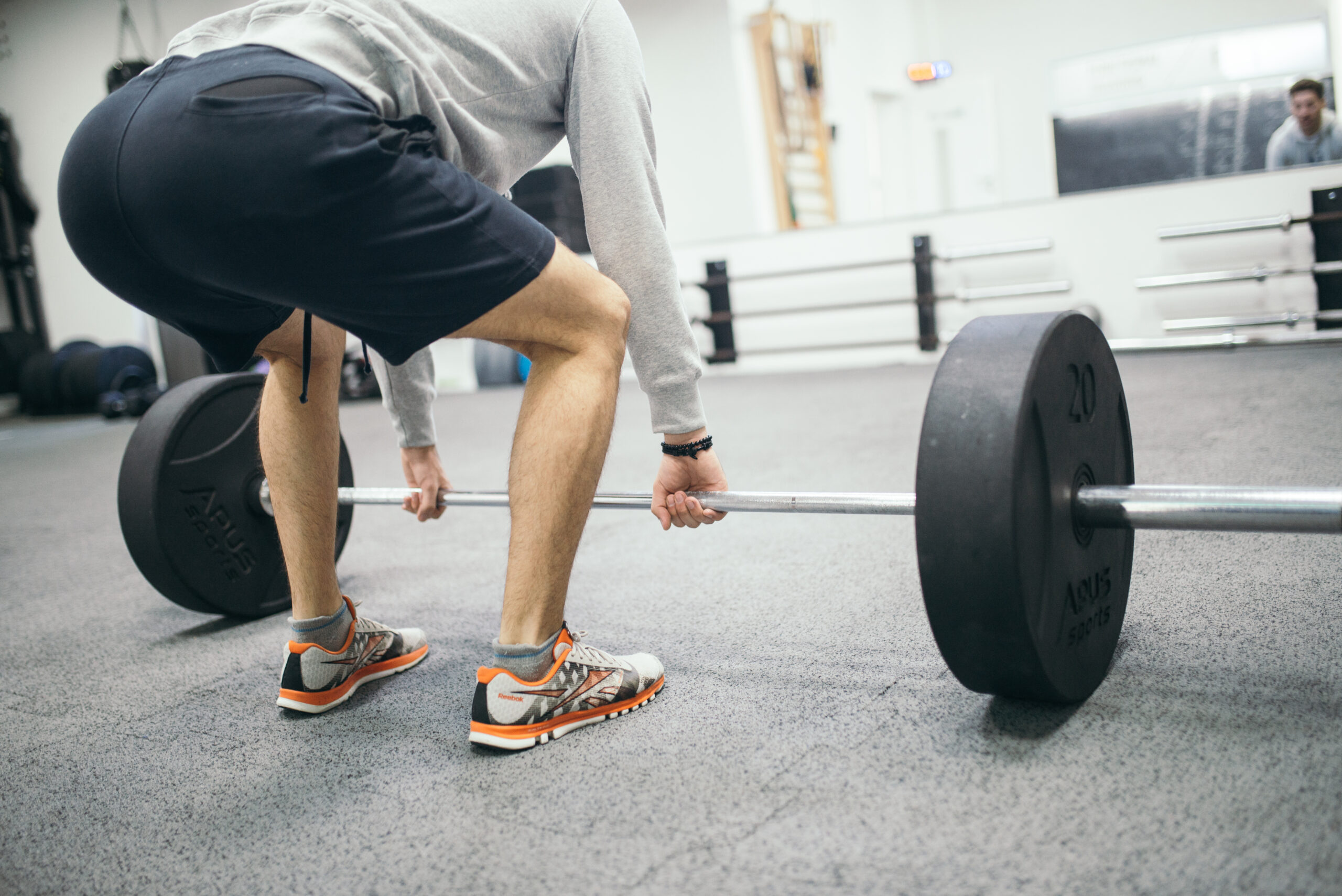
The deadlift is fundamentally a hip hinge. It requires adequate hip flexion mobility to achieve the correct starting position – bar over mid-foot, hips hinged back, lumbar spine neutral. When hip mobility is restricted – most commonly due to hip flexor tightness, hip joint capsular restriction, or posterior chain stiffness – the lumbar spine compensates by entering flexion to allow the hands to reach the bar.
This lumbopelvic compensation is the mechanism that converts a hip-dominant exercise into a lumbar-dominant one, and it is a direct pathway to the disc loading pattern described above.
Research directly examining the relationship between hip flexion mobility, lumbar extensor strength, and lumbar spine flexion during lifting found that reduced hip flexion mobility was significantly associated with greater lumbar flexion during the lift, confirming the lumbopelvic compensation mechanism that physical therapists observe clinically.
The clinical takeaway: restricted hip mobility is often the upstream driver of lower back pain after deadlifts, and it must be assessed and addressed as part of any treatment program.
Not sure if your lower back pain after deadlifts is a technique issue, a mobility problem, or something that needs a closer look? Book a free discovery call and get a clear answer from a Doctor of Physical Therapy.
4. Load and Volume Spikes – Doing Too Much Too Fast
Even with perfect technique and adequate mobility, the lumbar spine can become symptomatic when training load or volume increases too rapidly. The tissues of the lumbar spine – discs, erectors, ligaments – adapt to progressive loading over time. When loading exceeds the tissue’s current capacity, whether through a single maximal attempt or an accumulated volume spike over multiple sessions, injury or pain results.
Research examining lumbar biomechanics across repetitive deadlift exposure found that cumulative compressive loading, repetition range, and fatigue-induced technique deterioration were all significant contributors to lumbar tissue stress – particularly relevant for high-volume training protocols or worksets performed to failure.
Common load management errors seen in clinical practice:
– Adding too much weight too quickly (greater than 5–10% load increase per week for intermediate/advanced lifters)
– Performing near-maximal singles without adequate warm-up or preparation sets
– High-volume deadlift sessions without adequate recovery between training bouts
– Returning to pre-injury loads too soon after a period of detraining or injury
The Surprising Truth: Deadlifts Can Actually Treat Lower Back Pain
Here is where the research challenges the intuition of many patients – and some clinicians.
Multiple randomized controlled trials now support deadlift-based resistance training as an effective treatment for chronic low back pain – not just something to be avoided while recovering from it.
A landmark randomized controlled trial – 70 patients with chronic, non-specific low back pain – compared individualized low-load motor control exercise to a high-load deadlift-based lifting program. Both groups improved significantly in pain intensity, activity limitation, and physical performance at 8 weeks. There was no significant difference between groups, meaning the high-load deadlift program was equally effective as targeted motor control training – a finding that reframed the clinical view of heavy lifting in LBP management.
The same research group’s 24-month follow-up confirmed that the improvements seen at 8 weeks were maintained at 2 years in both groups, with no safety concerns identified in the high-load lifting arm. These are not patients without pain – these are people with chronic lower back pain who deadlifted under supervision and got better.
Further research examined which patients with chronic lower back pain respond best to supervised deadlift training. Participants with lower baseline disability and better baseline lumbar extensor endurance showed the greatest improvements in pain and function. This suggests that early intervention – before disability becomes entrenched – is the optimal window for deadlift-based treatment.
A systematic review and meta-analysis confirmed these findings at a population level: posterior-chain resistance training programs – which centrally feature hip hinge patterns including the deadlift – produced significantly greater reductions in pain and disability compared to general exercise and walking programs for chronic low back pain.
A focused systematic review synthesizing all available studies on deadlift training specifically for lower back pain concluded that deadlift exercise is associated with reductions in pain and improvements in function across all included studies, with no serious adverse events reported.
The clinical bottom line: The deadlift is not the enemy of a hurting lower back. Done correctly and progressed appropriately, it is one of the most effective rehabilitative tools a physical therapist can prescribe.
What About the Intervertebral Discs Specifically?
One of the most common fears patients express is “I’m going to herniate my disc” – or, having already herniated one, “the deadlift will make it worse.” The research presents a more nuanced picture.
An MRI study examining the acute physiological response of lumbar intervertebral discs to a high-load deadlift protocol found that deadlift exercise produced measurable changes in disc hydration and height – consistent with normal mechanical loading and subsequent fluid diffusion – but no evidence of structural damage in healthy lifters performing the exercise with proper technique. This is consistent with the understanding that mechanical loading, within tolerable ranges, is necessary for disc health and nutrition.
The discs become problematic when:
– Repeated lumbar flexion under compressive load cycles the posterior annulus through excessive strain
– Training volume and load outpace tissue adaptive capacity
– A pre-existing disc injury (including asymptomatic bulges, which are extremely common) is subjected to sudden high-load demands without appropriate preparation
It is worth noting that disc “abnormalities” on MRI are present in a very high percentage of pain-free adults – a finding consistently replicated across imaging studies. The mere presence of a disc bulge or degeneration on imaging does not predict pain, and it does not preclude safe, progressive return to deadlift training under physical therapy guidance.
What a Physical Therapist Evaluates When You Ask: Why Does My Lower Back Hurt After Deadlifts?
A comprehensive PT evaluation for lower back pain after deadlifts goes well beyond asking “where does it hurt?” Here is what a thorough assessment includes:
Pain Behavior Classification
Understanding whether your pain is mechanical (changes with position and movement), inflammatory (worse at rest and in the morning), or neurogenic (radiates in a dermatomal pattern with neurological signs) drives the entire treatment approach. Pain that is positional and movement-dependent – the vast majority of lower back pain after deadlifts – is highly responsive to physical therapy.
Hip Mobility Assessment
Hip flexion range of motion, hip internal and external rotation, and posterior chain flexibility (hamstrings, piriformis) are each assessed. Restriction in any of these creates the lumbopelvic compensation patterns that drive lumbar overload during the hip hinge. This is often where the primary impairment is found.
Lumbar Extensor Strength and Endurance
The Biering-Sorensen test – a timed prone back extension hold against gravity – is a validated measure of lumbar extensor endurance with direct predictive value for deadlift performance and lower back pain recovery. Weakness here is directly addressed with progressive loading.
Core Bracing and Motor Control
The ability to generate adequate IAP, maintain neutral spine during a loaded hip hinge, and coordinate the deep stabilizers (transverse abdominis, multifidus, pelvic floor, diaphragm) is assessed through both specific tests and observation of the deadlift pattern itself. This is frequently where the most impactful technique correction opportunities are found.
Movement Screen: The Hip Hinge Pattern
Watching the patient perform a bodyweight hip hinge, a Romanian deadlift with a dowel rod, and then a loaded hip hinge reveals technique errors that cannot be identified through history or static assessment alone. Common findings: lumbar flexion at initiation, early knee extension, bar drift, asymmetric hip drop, and breath-hold timing errors.
Neurological Screen
Lower extremity sensation, strength, and deep tendon reflexes are assessed when pain radiates below the gluteal fold, to rule out nerve root compression or other neurogenic pathology requiring different management.
If you’re a lifter dealing with recurring lower back pain after deadlifts, a physical therapy evaluation can identify the exact impairment driving your pain – and build a plan to fix it. Book a free discovery call to get started.
A Physical Therapy Framework for Lower Back Pain After Deadlifts
Treatment is individualized to your specific findings, but the following phases represent the standard progression used in evidence-based physical therapy management of this presentation:
Phase 1: Pain Control & Mobility (Weeks 1-2): Reduce acute pain and inflammation; restore hip and lumbar mobility | Soft tissue mobilization; hip mobility drills (90/90, hip flexor stretches, hip CARs); lumbar mobility (cat-cow, quadruped rocking); activity modification — maintain movement, avoid provocative loads |
Phase 2: Motor Control & Stability (Weeks 2-4): Restore core bracing mechanics and deep stabilizer activation; establish the hip hinge pattern pain-free | Diaphragmatic breathing and IAP training; dead bug, bird dog, plank progressions; bodyweight hip hinge with cuing; RDL with dowel rod for proprioceptive feedback |
Phase 3: Strength Development (Weeks 4-8): Progressive loading of the posterior chain; address specific strength deficits | Trap bar deadlift progression (lower shear demand than conventional); Romanian deadlift loading; glute bridge and hip thrust progressions; single-leg RDL for posterior chain asymmetry; return to conventional deadlift at submaximal loads |
Phase 4: Performance & Return to Training (Weeks 8-12+): Full return to deadlift training with safe load progression; address performance goals | Conventional or sumo deadlift with progressive loading; periodization guidance; competition preparation if applicable; maintenance program design |
Note: Timeline is a general guide. Progression is driven by symptom response and objective performance markers – not the calendar. Some patients move through these phases faster; others require longer periods in earlier phases.
The Trap Bar Deadlift: An Evidence-Backed Starting Point
For patients whose lower back pain after deadlifts is directly provoked by the conventional deadlift, the trap bar (hex bar) deadlift is frequently the first loaded hip hinge used in rehabilitation. The trap bar allows the lifter to grip the bar at their sides rather than in front – reducing the horizontal moment arm between the bar and the lumbar spine, and allowing a slightly more upright torso angle. This substantially reduces the shear demand on the lumbar spine while maintaining high posterior chain loading.
Research confirms that the trap bar deadlift produces high erector spinae, quadriceps, and gluteal activation – comparable to or exceeding the conventional deadlift – while allowing a more mechanically favorable spinal position for patients early in rehabilitation. It is an excellent bridge back to conventional deadlifting for patients with lumbar-dominant pain presentations.
Why the Deadlift Is Worth Saving – Not Abandoning
Physical therapists who work with strength athletes hear this frequently: “My doctor told me to stop deadlifting forever.” This advice, while well-intentioned, is rarely supported by the evidence – and often sets the patient on a path toward progressive deconditioning, hip extensor weakness, and worsening long-term back pain.
The most comprehensive evidence synthesis on exercise for chronic low back pain – a Cochrane systematic review analyzing 249 RCTs with over 24,000 participants – found moderate-certainty evidence that exercise therapy produces significantly greater improvements in pain and function than no treatment, usual care, or passive modalities. Resistance training specifically targeting the posterior chain – of which the deadlift is the centerpiece – aligns precisely with the interventions that outperform general exercise in the research.
The goal of physical therapy is not to tell you to stop lifting. It is to identify why your back is hurting, fix the underlying impairment, rebuild the movement pattern with proper mechanics, and return you to the training you value – often stronger and with better technique than before the injury.
Red Flags: When Lower Back Pain After Deadlifts Requires Immediate Medical Attention
Seek immediate medical care if your lower back pain after deadlifts is accompanied by any of the following:
– New onset bowel or bladder dysfunction (incontinence, retention, or loss of urge sensation)
– Saddle anesthesia – numbness or tingling in the groin, perineum, or inner thighs
– Progressive lower extremity weakness that is worsening over hours or days
– Back pain accompanied by fever, unexplained weight loss, or night sweats
– Pain that is severe, constant, and completely position-independent
– History of cancer with new back pain
– Back pain following a fall or significant trauma separate from the lift
These symptoms may indicate cauda equina syndrome, spinal infection, or other serious pathology requiring urgent imaging and medical evaluation – not PT.
Why Does My Lower Back Hurt After Deadlifts? What You Should Do About It
1. Do not panic – and do not immediately stop all training. The majority of lower back pain after deadlifts is either DOMS or a technique/load management issue, both of which are highly manageable. Complete rest typically worsens outcomes for mechanical lower back pain. Maintain gentle movement.
2. Distinguish soreness from injury. Bilateral muscle soreness that peaks at 24–48 hours and resolves with light activity is DOMS. Sharp, unilateral, neurological, or persistent pain that does not improve with movement is a different story.
3. Get a physical therapy evaluation. A thorough PT assessment will identify the specific mechanism driving your pain – whether that is hip mobility restriction, inadequate bracing mechanics, a technique breakdown, or a load management error – and build a targeted plan to address it. Do not guess.
4. Address hip mobility directly. If you have limited hip flexion range of motion, you are deadlifting with a significant risk factor that no amount of “keeping the back flat” can fully compensate for. Restore the hip, and the lumbar spine often follows.
5. Learn to brace. Proper IAP generation before each heavy set is one of the highest-yield technique interventions for reducing lumbar load during the deadlift. If you are not bracing deliberately, start now.
6. Respect load management. The tissues of the lumbar spine adapt to progressive loading – but slowly. Do not rush load progression. The classic “10% rule” (no more than 10% increase in weekly load or volume) is a reasonable conservative guideline for injury-prone periods.
7. Trust the evidence on resistance training. Multiple RCTs now support deadlift-based training as an effective treatment for chronic low back pain. The goal is not to avoid the deadlift – it is to return to it safely and with a spine that is better prepared to handle its demands.
Book Your Free Discovery Call Today
If you’re still wondering why does my lower back hurt after deadlifts – it doesn’t mean you have to stop pulling. It means something needs to be identified and fixed. Talk to a Doctor of Physical Therapy directly – no pressure, no obligation. We’ll assess your movement, identify the impairment, and build a plan to get you back under the bar.
Book Your Free Discovery Call →
Or call us directly at (818) 351-1623
Frequently Asked Questions: Why Does My Lower Back Hurt After Deadlifts?
Is it normal for your lower back to be sore after deadlifts?
Mild, bilateral soreness in the lower back muscles 24–48 hours after deadlifting is normal DOMS — especially if you’re new to the movement, returning after time off, or increased your volume or load. This is not injury. However, sharp pain during the lift, pain that radiates into your legs, or soreness that doesn’t resolve within 72 hours warrants evaluation.
Should I stop deadlifting if my lower back hurts?
Not necessarily. Research shows that complete rest typically worsens outcomes for mechanical lower back pain. The better approach is to identify what’s causing the pain — technique error, mobility restriction, load management issue — and address it directly. In many cases, you can continue training with modifications while the underlying problem is corrected.
Can deadlifts cause a herniated disc?
Deadlifts performed with significant lumbar flexion under heavy load can contribute to disc injury over time. However, the deadlift itself is not inherently dangerous to your discs. Research shows that mechanical loading within tolerable ranges is actually necessary for disc health. The risk comes from repeated flexion under load, inadequate bracing, and load spikes — all of which are correctable.
Are sumo deadlifts easier on the lower back than conventional?
Sumo deadlifts allow a more upright torso position, which can reduce the shear demand on the lumbar spine compared to conventional. For some lifters with lower back pain after deadlifts, sumo is a viable modification during rehabilitation. However, the best variation for you depends on your specific anatomy, mobility, and pain presentation — which a physical therapist can assess.
How long does it take to get back to deadlifting after lower back pain?
Most lifters with technique- or load-related lower back pain after deadlifts can return to some form of deadlift training within 2–4 weeks with proper physical therapy guidance. Full return to previous loads typically takes 8–12 weeks, depending on the severity of the issue and your compliance with the rehab program. Book a free discovery call to get a realistic timeline for your situation.
Should I wear a belt to prevent lower back pain when deadlifting?
A lifting belt can help increase intra-abdominal pressure and provide tactile feedback for bracing — but it does not replace proper bracing mechanics. If you cannot brace effectively without a belt, the belt is masking a deficit, not fixing it. Address the bracing pattern first, then use a belt as a performance tool for heavier loads.